The exam bottleneck — 1,200 people for 187 places
People assume the hard part is learning German. In Nepal the hard part is getting a seat in the exam, and nobody selling you a course is going to say so.
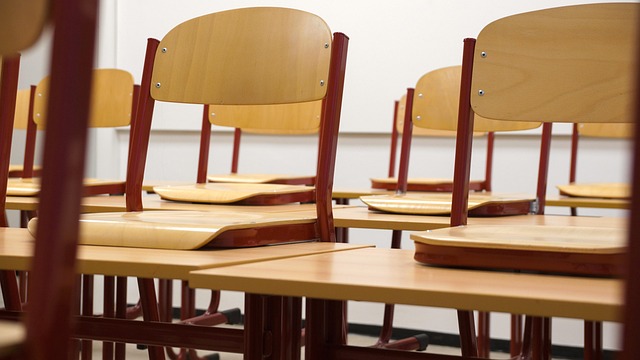
On 17 August 2026, applicants began queueing outside the exam centre in Kathmandu at midday. They waited through the afternoon, through the night, and into the following day.
We are told roughly 1,200 people were in that queue. There were 187 places.
That is about six people for every seat — and this was registration for A2, the second-lowest level of the six. One applicant who queued the full twenty-four hours, sleeping outside, secured a place for an exam nine days later.
What this means
It means the usual advice — study hard, then take the exam — describes a process that does not exist. The real sequence is: study hard, then win a lottery you enter by standing in the street overnight.
It also means a number of things that follow, and which nobody tells you:
Your exam date is not under your control. You can be fully prepared and still be four months from a certificate.
The shortage does not stop at A2 — it gets worse. At B1 and B2 registration moves online, so you are not sleeping outside; you are refreshing a Facebook page instead. But the waiting list is long. One applicant on the B1 list in August 2026 was past position 1,000.
And B2 appears to run only once a year. We are told by candidates that after the July 2026 sitting, the next B2 exam date at the Kathmandu centre is July 2027. If that is right, someone who finishes a B2 course in the summer waits twelve months for a chance to certify it. We have asked the centre to confirm.
And where the queue is physical, that is not a neutral cost. Waiting a full night outside is not equally available to everybody. It is harder if you are travelling in from outside the valley, if you have work or family duties, and it carries real safety risk — particularly for young women queueing alone overnight.
This explains the B1 wall, and it is not what people say it is. Teachers in Nepal report that many students stop at B1 and few go on to B2. That is usually described as students losing interest.
It is not. If B2 runs once a year, then finishing a B2 course and sitting a B2 exam are separated by up to twelve months — regardless of how good you are or how hard you work. People are not stopping at B1. They are being stopped, by a calendar. B1 is enough for the visa, and waiting a year to prove B2 is a cost most people cannot carry.
Someone who sleeps on a pavement for twenty-four hours to sit A2 is not short of motivation.
There is a way round this calendar, and it is further down the page. VHS has an ÖSD B2 scheduled for 4 November 2026, and ÖSD is accepted for the visa. If the Goethe B2 is a year away, that is the door.
The rules are different at different levels — and this matters
The Goethe-Zentrum Kathmandu is the Goethe-Institut's cooperating institution in Nepal, offering certificates at A1 through C1. Its own published information sets out two quite different registration systems:
A1 and A2: registration is physical. Places are given out in person on announced dates, first come first served. That is why the queue above formed — it was A2 registration, and standing in it overnight was the process.
B1 and B2: registration is online. Applicants submit a form published on the Goethe-Zentrum Kathmandu Facebook page, again first come first served.
If you are heading for an Ausbildung, B1 is your level — so watch that Facebook page, not the street. The form appearing there is the event you cannot afford to miss.
The centre states it can take a maximum of 70 applicants for exams at all levels, across three Sundays a month. That is around 200 places a registration round, which fits the 187 reported above.
And one rule matters more than the seat count: B1 and B2 registration reopens only once every applicant who already submitted a form has been given a date. Registration is not a monthly event you can plan around. It reopens when the queue clears — which means the wait is open-ended rather than merely long.
What to do about it
Plan the exam first, and everything else around it. Most guides treat the certificate as step one of many. On this evidence it is the longest and least predictable step. Work backwards from the German training year: chamber guidance is 4–6 months from contract to entry, and your employer needs the certificate before the contract.
For B1 and B2, follow the Goethe-Zentrum Kathmandu Facebook page. That is where the registration form is published, and allocation is first come first served. The day you submit matters more than how ready you feel that week.
For A1 and A2, expect to queue in person. People go in groups and take turns. If you have to be there overnight, be there with someone — that is a safety matter, not just a comfort one.
Five institutions are accepted, not one — and you can mix them.
Read this next part carefully. Getting it wrong costs money and months.
The German Embassy in Kathmandu accepts certificates from five providers, and explicitly allows you to sit different parts of the exam with different providers. Its own words:
Es ist möglich einzelne Prüfungsteile bei verschiedenen anerkannten Anbietern zu absolvieren (z.B. 3 Teile beim Goethe Zentrum und 1 Teil bei der VHS). Nur Sprachzertifikate der folgenden Institutionen können derzeit anerkannt werden: Goethe Zentrum Kathmandu, VHS (Bhaktapur, Kathmandu und Pokhara), IISC Study Hub, Telc oder ECL.
We read that page on 9 October 2026. If somebody tells you there are only three places you can sit the exam, they are working from an older list.
| Provider | Where | Notes |
|---|---|---|
| Goethe-Zentrum Kathmandu | Thapathali | The queue everybody is in |
| VHS | Bhaktapur, Kathmandu and Pokhara | A licensed ÖSD exam centre. The Kathmandu branch at Putalisadak is now named by the embassy in its own right |
| IISC – Study Hub | Kalopul-Ratopul Road, Kathmandu | Licensed by ÖSD for every level from A1 to C2. Newly named by the embassy |
| telc | no centre in Nepal | Accepted, but you would have to sit it abroad |
| ECL | Kathmandu | Accepted. The most expensive of them all — see below |
What that means for you.
VHS is a second accepted route, and it now counts in Kathmandu too. If you are stuck deep in the Goethe waiting list, this is the alternative. VHS is a licensed ÖSD examination centre and takes external candidates, not only its own students. For anyone outside the valley, Pokhara may be far easier to reach than either.
IISC – Study Hub is a third door in Kathmandu. It is on Kalopul-Ratopul Road. ÖSD licenses it for every level from A1 to C2, and the embassy accepts its certificates. We know nothing else about it yet: not its prices, not its dates, and not whether it examines people who have not taken its courses. Ask it those three things directly.
Check the name and the street against ÖSD's own register before you pay anybody. ÖSD's register is free, it is the authority on who is licensed, and for Nepal it lists exactly three centres: VHS Bhaktapur, VHS Pokhara Language Center, and IISC – Study Hub on Kalopul-Ratopul Road. Similar trading names exist in Kathmandu at other addresses. That is not an accusation about anyone — it is a reason to match both the name and the street against the register, which takes a minute and costs nothing.
An official ÖSD certificate counts. The embassy told us so in writing in August 2026: "Ja, auch diese wird akzeptiert wenn es sich um ein offizielles ÖSD Zertifikat handelt." — "Yes, that one is accepted too, as long as it is an official ÖSD certificate." One warning. We asked about a centre in Nepal. We did not ask about an ÖSD exam sat in another country, so do not assume that one counts.
You do not need to buy a course to sit the exam — but being an outside candidate costs about double. The Goethe-Zentrum and VHS each publish two prices: one for their own current students, one for everybody else. That is not a scam. It is printed on their own websites, and it is a real number you should have before you choose a course. See the prices below. ÖSD exams are course-independent, but a centre can be licensed to examine only its own course students rather than outsiders, so if a course and an exam seat are being sold to you together, ask two questions and get the answers in writing: can I sit the exam without taking your course, and what does the exam cost on its own? VHS takes external candidates.
You do not have to sit all four parts in the same place. The embassy gives its own example: three parts at the Goethe-Zentrum and one at the VHS. If you can get some modules but not others, that is not a dead end — it is the documented route.
telc is accepted but has no centre in Nepal, and none is planned. We asked telc directly in August 2026. Their answer: "Aktuell bieten wir in Nepal keine telc-Prüfungen an und es gibt derzeit auch keine konkreten Pläne, ein Prüfungszentrum dort einzurichten." — "At present we do not offer telc examinations in Nepal, and there are currently no concrete plans to set up an examination centre there." They pointed to neighbouring countries instead. So telc means India — see below.
ECL — accepted, and now on the embassy's own list
ECL exams are sold in Kathmandu, and an ECL certificate is accepted for the visa. The embassy names ECL on its own visa page.
Since September 2026 a German ECL exam has been advertised from a centre in Putalisadak, offering A2, B1, B2 and C1, with a sitting in November 2026.
The exam centre is real. ECL publishes its own register of licensed examination centres. It lists a centre in Kathmandu for German at A2, B1, B2 and C1. Check it yourself at ECL's exam-centre finder — choose Asia, then Nepal.
The Federal Foreign Office lists ECL too. Its published answer on accepted language certificates names ECL alongside Goethe, telc, ÖSD, TestDaF and DSD, because the test for a visa file is membership of the Association of Language Testers in Europe (ALTE), which ECL holds.
Know that ECL got harder in August 2026. Under ECL's own exam regulations, from August 2026 a pass needs at least 60% in every one of the four modules. Before that you could carry a weak skill on a strong average. You cannot now. ECL says clearly that this applies only to exams sat from August 2026 onwards.
And it is the most expensive route you can sit in Nepal. ECL's own registration system shows the Kathmandu fees for the November 2026 sitting. Converted at the same 173 rupees to the euro used further down this page:
| Level | ECL | Goethe, outside | VHS, outside |
|---|---|---|---|
| A2 | NPR 29,500 | about NPR 13,000 | NPR 21,375 |
| B1 | NPR 30,500 | about NPR 16,500 | NPR 28,680 |
| B2 | NPR 31,500 | about NPR 19,000 | NPR 30,285 |
Those are for all four modules. A single ECL module costs NPR 7,500 at A2, NPR 8,500 at B1 and NPR 9,500 at B2.
Against VHS the gap is small — about NPR 1,800 at B1. Against the Goethe-Zentrum it is not: a B1 at ECL costs nearly twice as much as the same level at Goethe.
And ECL's modules do not add up the way the others do. Four B1 modules bought separately come to NPR 34,000 — more than the NPR 30,500 complete exam. There is no saving in splitting them, only a penalty. At the Goethe-Zentrum the parts add up exactly to the whole: €25, €50, €75, €95 for one, two, three or four.
That matters because of the 60% rule above. Fail one module at ECL and repairing it costs NPR 8,500. Fail one at the Goethe-Zentrum and it costs €25 — about NPR 4,300, roughly half. The exam that is hardest to pass cleanly is also the most expensive to repair.
So ECL is a real option, and an expensive one. In a country where the queue is the problem, another accepted route is worth something. Weigh it on price and on dates against the Goethe-Zentrum, VHS and IISC – Study Hub. Then read the next section, which is about the other person who has to accept your certificate.
Accepted for a visa is not the same as wanted by an employer
Two different people have to be satisfied by your certificate, and they do not work from the same list.
The embassy decides whether you get a visa. Before that, a German employer has to decide whether to offer you the contract. Nothing in German law tells a private employer which exam board to trust. They may ask for whichever one they like, and they are allowed to say no to one they have not heard of.
In practice they ask for three names. Two German employers, read on 25 September 2026:
| Who | Level asked for | Exam providers named |
|---|---|---|
| medbo Pflegeschulen, for international applicants | "mindestens ein B2-Zertifikat, besser C1" | Goethe-Institut, telc, ÖSD |
| Helios, one of Germany's largest hospital groups | B2 | Goethe, telc, ÖSD |
Neither of them names ECL. That is two employers, not a survey, and it does not mean every employer refuses ECL. It means the three names people keep repeating to you are the three that actually appear in writing, and ECL is not yet one of them. ECL's own recognition page agrees on the principle — it says acceptance depends on the institution, and tells candidates to check with that institution before they pay.
Note also that both of those are care employers, and care commonly asks for B2 where the visa needs B1. A certificate that satisfies the embassy is not automatically enough for a Pflegeausbildung.
So ask, in one line, before you commit to anything. Send it to the employer, not to an agent:
"Akzeptieren Sie ein ECL-Zertifikat auf Niveau B1 als Nachweis meiner Deutschkenntnisse?"
It costs nothing, and it gives you an answer in writing that you can keep with your papers. If somebody tells you there is no need to ask, ask why.
And one exam in Nepal answers both questions at once: ÖSD. VHS Bhaktapur, VHS Pokhara and IISC – Study Hub are all licensed ÖSD examination centres. All three are on the embassy's own list, the embassy has separately confirmed that an official ÖSD certificate counts, and ÖSD is named by both employers above. It is also cheaper than ECL at every level. If you have any choice of dates at all, that is what to aim for. The VHS section further up this page has the details, including an ÖSD B2 sitting on 4 November 2026.
What the exam actually costs
The Goethe-Zentrum and VHS both publish their fees. You do not have to guess, and nobody should be quoting you a different number.
| Level | Goethe, own students | Goethe, outside | VHS, own students | VHS, outside |
|---|---|---|---|---|
| A1 | €35 | €60 | NPR 10,690 | NPR 19,595 |
| A2 | €45 | €75 | NPR 11,225 | NPR 21,375 |
| B1, all four modules | €55 | €95 | NPR 16,390 | NPR 28,680 |
| B2, all four modules | €65 | €110 | NPR 16,390 | NPR 30,285 |
Goethe prices are published in euro but paid in rupees, converted at the European Commission rate on the day registration opens. At roughly 173 rupees to the euro, an outside B1 at the Goethe-Zentrum is about NPR 16,500 and the same exam at VHS is NPR 28,680.
So for B1 the Goethe-Zentrum is the cheapest accepted route in Nepal, by a wide margin — and it is also the one with the queue. That is the trade you are actually making. VHS costs roughly 70 per cent more and has dates.
Modules are priced one by one, and that is how you repair a fail cheaply. The Goethe-Zentrum sells B1 by the module at the outside rate: €25 for one, €50 for two, €75 for three, €95 for all four. Pass three parts and fail one, and you retake that one part for €25 instead of sitting the whole exam again for €95. VHS publishes its free seats the same way, module by module. This is the embassy's module-splitting rule as a price list.
Do not read the seat counts as a countdown. VHS publishes live seat numbers for every sitting, and they move in both directions. Its B1 exam on 27 October 2026 showed 57 free seats per module on 7 September, none on the morning of 11 September, and 110 in three of the four modules the same afternoon, with speaking the only module at zero. Sittings also show "Booking Closed" while seats are still listed, which appears to mean booking has not opened rather than that the exam is full. So check the page often, ask the branch directly, and do not conclude from one look that a date is gone or that it is safe.
VHS prices every module separately, and some are cheap. Its published external module prices: B1 reading NPR 4,990, listening NPR 4,990, writing NPR 12,470, speaking NPR 6,230. At B2, oral NPR 9,800 and written NPR 20,485. If money is the problem, finding under NPR 5,000 for a single reading module is a very different thing from finding NPR 28,680 all at once.
And VHS runs B2 when the Goethe-Zentrum does not. A B2 sitting is scheduled at VHS Bhaktapur for 4 November 2026, with thirty places in each of its two modules. If the Goethe B2 really runs once a year, this is the way round it. It is the best reason you have to look past the queue you are already standing in.
Budget 45 days for the result, or pay to hurry it. VHS states that ÖSD papers go to Vienna for marking and results take 45 days. There is an express option at an extra €70 at A1 and A2, or €80 at B1, for a result in twelve working days. Since the embassy wants the certificate in the file when you apply, the exam date is not your deadline — the result date is. Count backwards from the application, not from the exam.
Both providers restrict the cheaper price to their own current students. At the Goethe-Zentrum the internal exam is the end-of-course exam and you must pass it to move up a level, so it is not a discount you can simply ask for. Price the course and the exam together before deciding either.
Sitting telc in India — the option nobody mentions
This is a real route, and the pieces fit together better than they look.
- telc is on the embassy's accepted list. A telc certificate counts for the Ausbildung visa.
- There is no telc centre in Nepal, and telc told us there are no plans for one. The nearest centres are in India, including New Delhi.
- Nepali citizens can enter India without a visa, under the 1950 Treaty of Peace and Friendship. No visa application, no waiting list, no fee.
- Group arrangements are possible. We asked telc whether a group from Nepal could get exam places together. Their answer: "grundsätzlich wäre dies möglich, allerdings ist eine direkte Anmeldung bei uns nicht möglich. Die lizenzierten telc Prüfungszentren organisieren die telc Prüfungen eigenständig und legen die Prüfungstermine fest." — "In principle this would be possible, but you cannot register directly with us. The licensed telc examination centres organise the telc examinations themselves and set the examination dates."
In plain terms: yes in principle, but you arrange it with an individual licensed exam centre, not with telc head office. telc publishes a centre finder on its website; a centre in Delhi or elsewhere in northern India is the place to ask about dates and about places for a group.
Whether this is worth it is a calculation, not a principle. Against it: roughly a thousand kilometres each way from Kathmandu, travel and accommodation costs, and telc is not the exam format Nepali courses prepare you for.
For it: if you are deep in a waiting list with no date, a certificate you can actually obtain in a few weeks may be worth a difficult journey. Several people travelling together shares the cost, and is safer than going alone.
Measure it against the published Nepali prices above, not against a rumour. And do not let anyone tell you it is impossible. It is not, and the embassy accepts the result.
And it is already being sold. At least one Nepali company now advertises telc B1 and B2 sittings in Delhi as a package — exam seat, travel and accommodation together, with a sitting reserved for its own candidates. That is the arrangement telc described to us, so the route is real and somebody is running it. Whether any particular offer is good value is a different question, and you answer it with four questions before you pay anything:
- Which exam centre, and is it on telc's own list? Check the name against telc's centre finder. Anyone can print a logo.
- What is the total, itemised? Exam fee, transport, accommodation and the company's own fee are four separate numbers. A single figure with no breakdown is not a price, it is a guess you are being asked to trust.
- What happens if the date moves, or if I cannot travel? Ask specifically what an advance payment buys and whether it is refundable. At least one operator states that once the deposit is paid the exam cannot be rescheduled.
- Who issues the certificate, and how do I get it? The certificate comes from telc. Ask how long it takes and how it reaches you.
Compare the answer against the published Nepali prices above before you decide. Delhi may still win if you have no date — but you should be comparing numbers, not stories.
And the certificate must be in the file when you apply. The embassy states the language proof "bereits mit der Antragstellung eingereicht werden muss" — submitted with the application itself, not handed in later. So the exam has to be done before you start the visa process, not alongside it.
What we still do not know
- Whether B2 really runs only once a year, and if so why
- The realistic wait from submitting the B1/B2 form to actually sitting the exam
- How quickly the online B1/B2 forms fill once published
- Whether the centre's capacity is increasing
- Whether IISC – Study Hub takes external candidates, what it charges, and how long its waiting list is. It is newly named by the embassy and we know nothing about it beyond the ÖSD register and that list
- Whether the embassy's au-pair page will be brought into line. It still names only VHS Bhaktapur and the Goethe-Zentrum for the A1 certificate, and for an au-pair application that page is the one that governs
- Whether any further provider is likely to be added
If you find any of this out, it is worth telling other people. This page exists because one person was willing to say what actually happened to her.
Where this comes from
-
The 17–18 August 2026 queue, the ~1,200 applicants and 187 places: first-hand account from an applicant who was in it, reported August 2026
-
Exam levels, the 70-applicant capacity, three exam Sundays a month, physical registration for A1/A2 and online forms via Facebook for B1/B2, first-come-first-served allocation, waiting list and the reopening rule: Goethe-Zentrum Kathmandu, FAQ about our exams
-
The five accepted providers — Goethe-Zentrum Kathmandu, VHS (Bhaktapur, Kathmandu and Pokhara), IISC Study Hub, telc and ECL — the module-splitting rule and the submit-with-application rule, quoted verbatim, read live on 9 October 2026: German Embassy Kathmandu, national visas
-
VHS as a licensed ÖSD examination centre, teaching A1–B2, offering places to external candidates, with a Kathmandu branch at Putalisadak since 2015: VHS Nepal
-
Three licensed ÖSD exam centres in Nepal — VHS Bhaktapur, VHS Pokhara Language Center and IISC – Study Hub, Kalopul-Ratopul Road, Kathmandu, the last licensed for A1 to C2. Checked 31 August 2026 and re-read on 9 October 2026, when the Kathmandu centre's name and address were taken from it: ÖSD exam centres
-
An official ÖSD certificate being accepted for the visa even from a centre the embassy's published list did not then name, quoted verbatim: German Embassy Kathmandu, by email, August 2026. The published list has since named it
-
ÖSD exams being course-independent, and centres being licensed either for their own course participants only or for external candidates too: ÖSD examination regulations
-
ÖSD relative difficulty, the reported B1 date roughly two months out, B1 waiting-list position past 1,000, and B2 reportedly next running July 2027: candidates preparing in Nepal, July–August 2026
-
telc centres in India including New Delhi; Nepali citizens may enter India visa-free under the 1950 Treaty of Peace and Friendship
-
Exam fees at both accepted Nepali providers, internal and external, including the per-module B1, B2 and C1 prices and the rule that euro prices are paid in rupees at the European Commission rate, checked 11 September 2026: Goethe-Zentrum Kathmandu, FAQ about our exams
-
ÖSD exam fees by level, internal and external, and the live per-module seat counts for each scheduled sitting, checked 11 September 2026: VHS Nepal
-
The 27 October 2026 B1 sitting at VHS Bhaktapur showing 57 free seats in every module on 7 September 2026 and none on 11 September: the same booking page, observed on both dates
-
Nepali companies selling organised telc sittings in Delhi with travel and accommodation, and the non-refundable deposit rule: an operator's own public website, read 11 September 2026
-
No telc centre in Nepal and no plans for one; group arrangements possible in principle but organised by individual licensed centres, not telc head office: telc gGmbH, by email, August 2026
-
Students stopping at B1: German teachers in Nepal, reported August 2026
-
A licensed ECL examination centre in Kathmandu offering German at A2, B1, B2 and C1, checked 11 September 2026: ECL exam-centre finder
-
ECL listed among the language certificates accepted in visa procedures generally, on the ALTE-standard test, checked 11 September 2026: Federal Foreign Office, accepted language certificates
-
ECL now named on the embassy's own published list, read live 9 October 2026. The same page named only three institutions and not ECL when it was re-read on 24 September 2026: German Embassy Kathmandu, national visas
-
ECL being accepted before the page said so: replies from the German Embassy Kathmandu to two separate enquiries, September 2026. Personal correspondence, not reproduced here
-
ECL sittings being advertised in Kathmandu: a public Facebook advertisement, September 2026
-
ECL's published Kathmandu fees and its November 2026 sitting, read on the exam board's own public registration form, 23 September 2026: ECL registration
-
The 60% minimum in every module, applying only to exams sat from August 2026 onwards, checked 11 September 2026: ECL exam regulations